
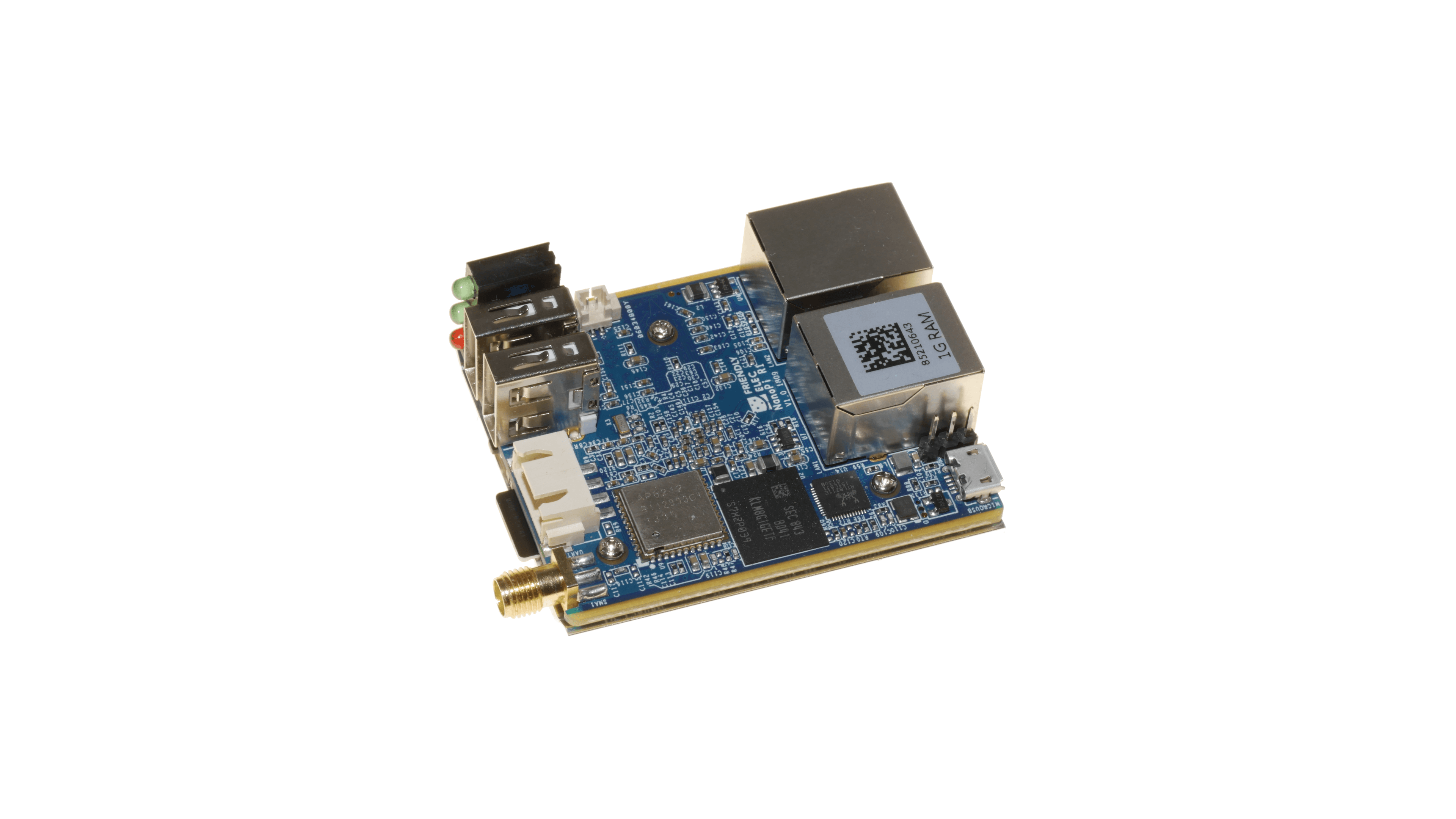

What Does Community Support Mean?
Community maintained targets have full featured Armbian OS support but lack quality control imposed by Armbian standard support criteria. Boards are supported / maintained at least on the level of 3rd party Linux distributions. They are maintained (or not maintained) by community members (like you). These builds are provided by the Armbian project as a service to the community. They are automatically generated and untested.
What you can do to help lifting support status?
- support users of this board in our forums
- stand up as a maintainer and start maintaining the board
- provide tests results prior to point release and propose lifting support status
- serial console is enabled on UART1, which is exposed on chasis,
- mUSB console is also enabled for login
- Bluetooth is not yet enabled.
- One Ethernet device gets random MAC
Fast, verified download & flash (recommended)
Armbian Imager is a lightweight, native flashing tool that supports both selecting and downloading an Armbian image before flashing, as well as flashing an already downloaded image.


Different images? Missing features? -> Download SDK Looking for compatible accessories? Want to participate in development?
Server images with Armbian Linux v6.12
Build Date: Apr 5, 2026
| Distro | Variant | Extensions | Torrent | Integrity | Size | |||||
 Ubuntu 24.04 (Noble) Ubuntu 24.04 (Noble) |
Server / CLI |  |
SHA | ASC | 406.5 MB | |||||
| * Server / CLI images comes with Network Manager and include packages like armbian-config, armbian-zsh etc. | ||||||||||
Minimal/IOT images with Armbian Linux v6.12
Build Date: Apr 5, 2026
| Distro | Variant | Extensions | Torrent | Integrity | Size | |||||
 Debian 12 (Bookworm) Debian 12 (Bookworm) |
Minimal / IOT | |
SHA | ASC | 244.6 MB | |||||
| * Minimal images have very small footprint. They come only with essential packages and build-in systemd-networkd. They are optimised for automation and production deployments. | ||||||||||
Specifications
1000tx 100tx 1wire 32bit 4 core CAN UASP bluetooth docker eMMC i2c spi wifi wireguard Allwinner H3
* Specifications differ from hardware revision, model and software support level
FAQs
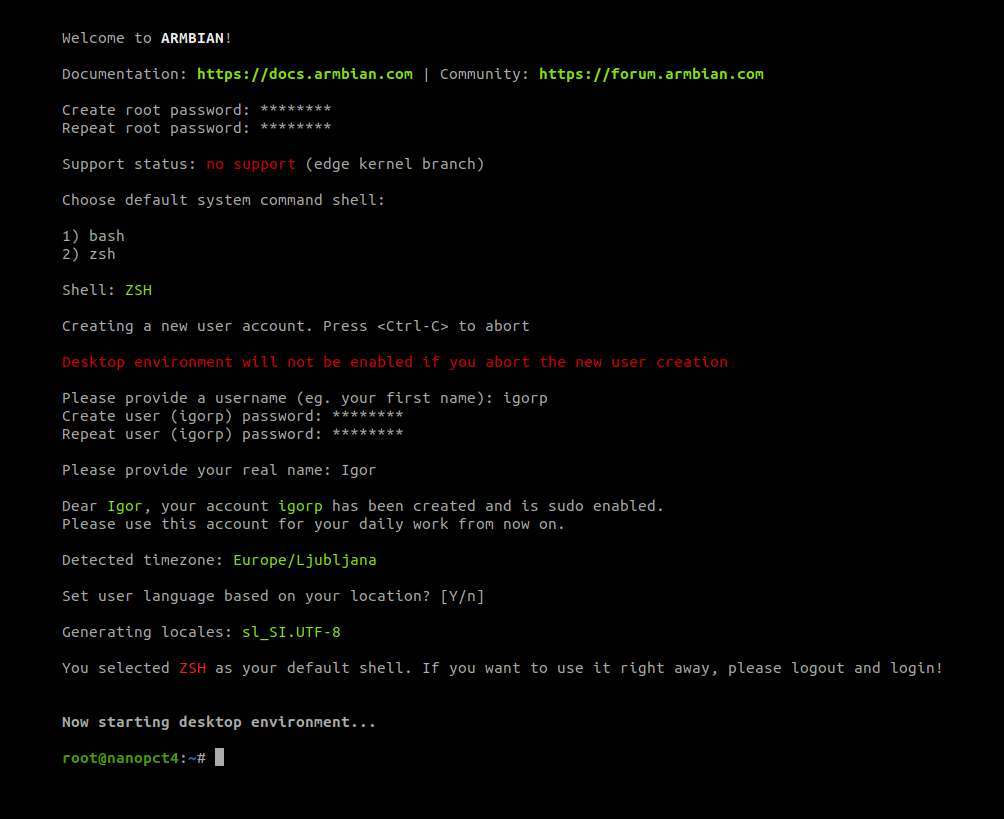
Support is provided in one of two ways:
- Free support is provided via general project search engine, documentation, community forums or IRC/Discord. Keep in mind this is mostly provided by our awesome community members in a best effort manner and therefore there are no guaranteed solutions.
- For commercial or prioritised assistance:
- book a an hour of professional consultation,
- consider becoming a project partner.
- Reach us out at https://armbian.com/contact,
dpkg -i linux-image-[branch]-family.deb linux-dtb-[branch]-family.deb. In that process you can enforce many customisation.